
HiShroom strips appear to be the first thing I’ve managed to take every single day. No pills to swallow, no glass of water needed. One just melts on my tongue, so I actually remember to take it.
Gregory B.
Explore 7 Everyday Memory Slips, What They May Be Telling You, And What To Check Next

I used to forget little details and misplace things around the house. Since I started taking HiShroom strips, my memory seems better, and I don’t forget things as easily. The routine is easy to keep up with, too. The strips come in a handy little tin that looks nice, so I carry it with me wherever I go.
Eva R.
Customer experience has not been independently verified. Individual results may vary. Images are illustrative.

Do you set down your glasses, then find yourself looking for them a few minutes later?
Does a familiar name sometimes sit just out of reach, even though you know exactly who the person is?
Have you walked into a room, paused, and wondered what you came in to do?
It is often the ordinary moments that catch your attention. Nothing dramatic. Just a detail that used to feel effortless.
One misplaced item does not tell the whole story. Neither does one forgotten name. What matters is whether these moments are occasional, changing, or starting to interfere with your day.
The seven situations below are examples to help you describe your experience. They are not a diagnostic test and do not show that you need a particular supplement.
Start with what you notice. Then separate two decisions: understanding a change in memory, and choosing a daily wellness product.
Perhaps you laugh it off in front of someone else, then think about it again later. You know the name will probably come back. You still wish it had arrived when you needed it.
That is why it helps to put the experience into words. “My memory is terrible” says how you feel. “I forgot the time we agreed to meet, even though we spoke yesterday” gives you something specific to look at.
Read through the examples at your own pace. You do not need to recognize yourself in every one. The aim is to notice what sounds familiar and what has actually changed, rather than to count up a score.

Your glasses were beside you a moment ago. Now you are checking the sofa, the side table, and the same pocket for the second time.
It is a familiar kind of frustration: remembering that you put something down, but not remembering where. A consistent place for everyday items can give the routine a little more structure.
If this is happening more often, make a note of a few examples. A concrete description is more useful than simply calling yourself forgetful.
For example, you might remember coming through the door with your glasses in your hand, but not the moment you put them beside the newspaper. It is that missing little step, rather than the item itself, that makes the search frustrating.

You arrive at the doorway with a sense that there was something to do, but the purpose has disappeared. Sometimes it returns as soon as you retrace your steps.
The moment itself may be brief. What can linger is the feeling of having to interrupt your day to recover a thought.
Try describing the situation as it happened: what you were doing, whether you were interrupted, and whether you remembered the task later.
Picture starting to fetch something, then stopping to answer the phone. By the time you reach the next room, the original task is no longer the one you were thinking about. That sequence is useful to remember when describing what happened.

You recognize the face. You remember where you know the person from. Yet the name takes a little longer to arrive.
A pause like this can feel more noticeable during a conversation than it does afterward. Give yourself a moment instead of turning that pause into a judgment about yourself.
Notice the pattern: an occasional delayed name is different from a growing difficulty recognizing familiar people or managing everyday conversations.
You may find yourself using a description instead: the neighbour with the dog, the friend from the walking group, the person you met last week. Note whether the name returns on its own or remains unfamiliar when someone supplies it.

You begin a story, answer a question, then lose the thread of what you were about to say.
The thought may return once the conversation slows down. Or you may decide to come back to it later. Either way, it can make a familiar conversation feel unexpectedly effortful.
If you are concerned, note whether these interruptions are becoming more frequent or whether someone close to you has noticed a change too.
It can happen halfway through a sentence or after another person interrupts. You remember the subject, but not where the story was going. If you make a note afterward, include whether you were able to pick up the thread again.

You return from an errand and remember the one thing you intended to pick up. Or the day ends before you make a call you had planned that morning.
This is the difference between knowing what you want to do and remembering it at the right moment. A short, visible reminder can make the task easier to revisit.
When missed tasks begin to affect important responsibilities, bring those examples to a health professional rather than relying on a new supplement to explain them.
A reminder can be very specific: “Call Sarah after lunch” gives you a person, an action and a time to check. A vague note saying “phone” may leave you trying to reconstruct the plan all over again.

Lists, notes, and familiar places for belongings can be useful tools. Using them is not a failure.
What may catch your attention is a change in how much you rely on them. Perhaps the reminder system has become more complicated than the task itself.
Keep the system simple enough to use: one place to check, clear notes, and fewer competing cues. If even familiar tasks are becoming difficult, ask for help assessing the change.
There is a difference between a system that saves you effort and one that creates more places to search. If you already keep a calendar beside the telephone, that may be a more useful home for a plan than another loose piece of paper.

You remember having the conversation but are less sure of the details. Was the visit on Tuesday or Thursday? Who was going to make the booking?
Writing down an important arrangement can remove the need to keep rehearsing it. Asking someone to confirm a detail is reasonable, too.
Repeatedly losing recent information, especially when it disrupts daily life, deserves a conversation with a clinician. This list cannot determine the cause.
Try separating the conversation from the arrangement. You may remember what you talked about but need to confirm the date, address or time. Those details are worth writing down accurately, especially when another person is relying on the plan.
Some forgetfulness can occur with aging. More substantial changes have many possible causes, and the right response depends on what is happening. Medicines and other health conditions can be relevant. A clinician can help assess the cause.1
Research is worth looking at with the same care. A small 2009 study of Lion’s Mane involved adults aged 50–80 with mild cognitive impairment. The chart below shows how many people were in each group, so the size of that study is clear.
30 adults were assigned to two equal groups.
Participants per group, not improvement scores. Mori et al., 2009. The study did not test HiShroom.
Start with a few specific examples rather than a score. When did you first notice the change? Does the information come back later? Are important tasks being missed?
If memory problems are new, worsening, or affecting daily life, arrange a medical assessment. Sudden confusion or memory change needs urgent medical attention.
A daily supplement is a separate choice. It should never be used to postpone getting a concerning change checked.
The trial reported improvements on a cognitive scale for the preparation studied over 16 weeks. It used approximately 2.88 grams of Lion’s Mane powder daily. HiShroom lists 30 mg of Lion’s Mane per strip. Those are different preparations and amounts. The result cannot be presented as a clinical result for these strips.
A familiar ingredient name does not establish that a product prevents or treats memory loss. HiShroom is a dietary supplement, not a treatment for dementia or another memory disorder.2
Her review describes a morning habit before heading out with her grandchildren.
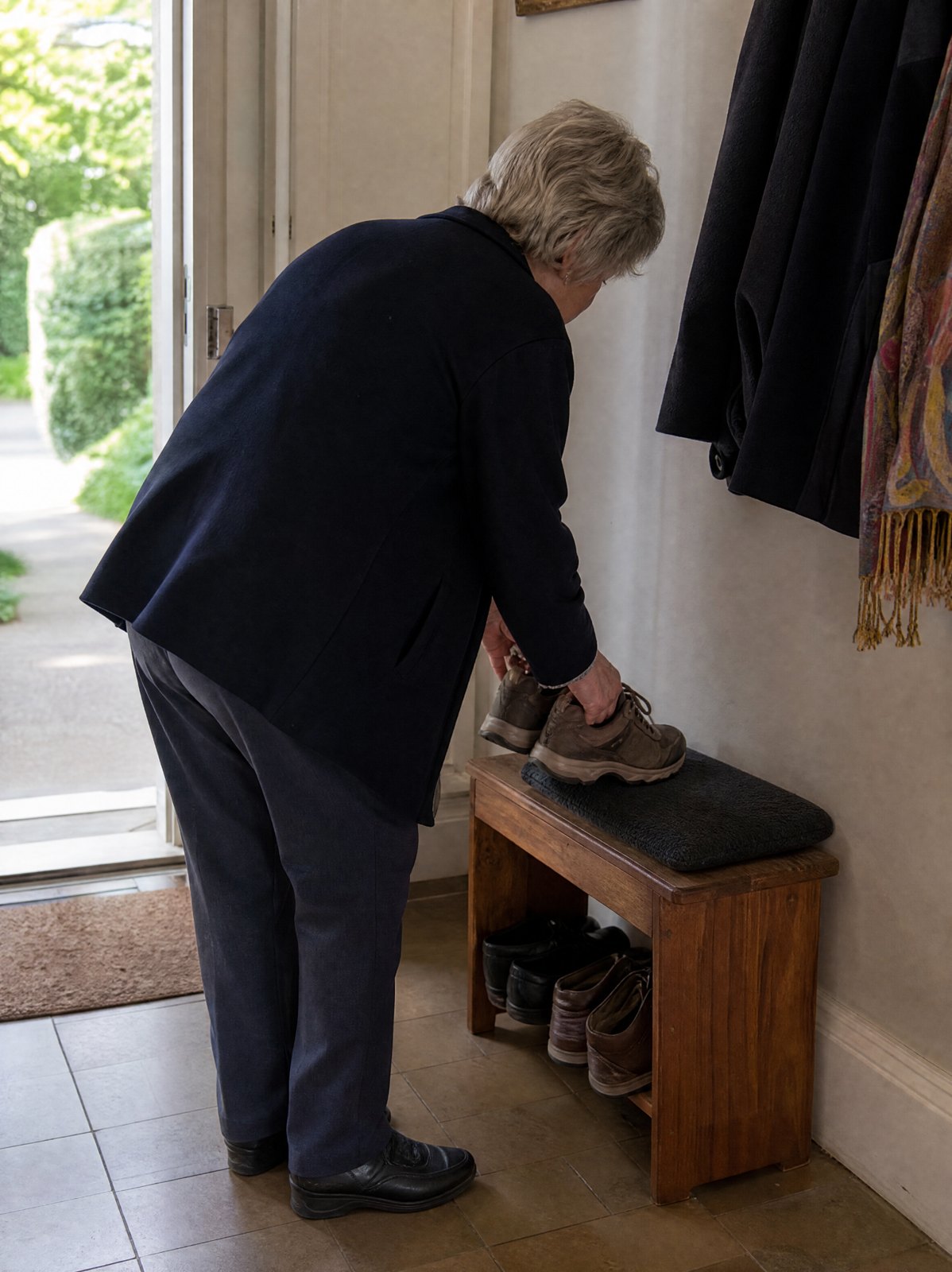
I’ve been enjoying my HiShroom strips for a few weeks and I genuinely look forward to them. I take one each morning with my first cup of tea, before I head out for my walk with the grandchildren. The chocolate taste with that hint of coffee is lovely. I did a lot of research before buying, and I’m glad I made this choice. It’s the one routine I haven’t dropped.
Rocio W. • Customer review supplied to HiShroom
Those are practical differences you can understand before you buy. They describe the format, not a promise that every memory slip will stop.
The next step is to look beyond the format and read what is actually inside.

A mushroom powder, a capsule, and an oral film are different ways to package a supplement. Even products that share an ingredient name can contain different amounts and preparations.
HiShroom lists four mushroom ingredients per strip: Lion’s Mane, Cordyceps, Maitake, and Shiitake.
Read the amounts on the label. Do not assume a serving is the same as the amount used in research, and do not increase the serving to imitate a study.
Choose a format you understand, with directions you can follow and information you can check.
The name on the front is only one part of the comparison. Turn the package over and look for the amount of each ingredient in a serving. A large number on the front may describe the weight of an entire blend, or even the contents of a whole container.
For HiShroom, the mushroom ingredients add up to 100 mg in each strip. The complete film weighs 260 mg because it also contains the ingredients that form and flavour the strip. Those two weights describe different things.
You should be able to tell what the product contains, how to take it, and what is included in the tin.
HiShroom’s oral-film format keeps preparation short: take the strip out, place it on your tongue, and let it dissolve.
The chocolate flavor is part of the experience. The compact tin keeps the daily serving easy to store as directed.
You can judge that practical fit before buying. Do you prefer a capsule, a powder or something that dissolves on your tongue? Is the label easy for you to read? Would you rather keep a small tin in its usual place than set out a scoop and a glass?
There is no need to turn a preference into a medical claim. The advantage of a prepared strip is the smaller preparation task. The ingredient amounts remain the amounts printed on the label.


HiShroom strips appear to be the first thing I’ve managed to take every single day. No pills to swallow, no glass of water needed. One just melts on my tongue, so I actually remember to take it.
Gregory B.
I love my HiShroom strips! One melts on my tongue after lunch and tastes like rich chocolate with a little hint of coffee. It’s become the part of my day I look forward to. There’s only the one flavour, but honestly, I don’t need another. Give it a try!
Diane Z.
I’ve been enjoying my HiShroom strips for a few weeks and I genuinely look forward to them. I take one each morning with my first cup of tea, before I head out for my walk with the grandchildren. The chocolate taste with that hint of coffee is lovely. I did a lot of research before buying, and I’m glad I made this choice. It’s the one routine I haven’t dropped.
Rocio W.
Customer wording supplied to HiShroom. Portraits are illustrative models, not the named reviewers. Individual experiences vary.
HiShroom oral film Capsule formatHiShroom oral filmCapsule format
I was sceptical about another supplement, but I’ve kept the HiShroom strips on my kitchen counter and taken one with my morning tea for six weeks now. They taste like chocolate, and it’s the first routine I’ve actually stuck with. I’ve already reordered.
James M.
HiShroom strips appear to be the first thing I’ve managed to take every single day. No pills to swallow, no glass of water needed. One just melts on my tongue, so I actually remember to take it.
Gregory B.
I love my HiShroom strips! One melts on my tongue after lunch and tastes like rich chocolate with a little hint of coffee. It’s become the part of my day I look forward to. There’s only the one flavour, but honestly, I don’t need another. Give it a try!
Diane Z.
I’ve been enjoying my HiShroom strips for a few weeks and I genuinely look forward to them. I take one each morning with my first cup of tea, before I head out for my walk with the grandchildren. The chocolate taste with that hint of coffee is lovely. I did a lot of research before buying, and I’m glad I made this choice. It’s the one routine I haven’t dropped.
Rocio W.
I’ve taken HiShroom strips for thirty days, and I can really notice a difference in my focus.
Margaret Collins
It’s easy to keep up with. One strip dissolves on my tongue, and the tin fits in my bag.
Susan Whitmore
Individual customer experiences. Results vary.
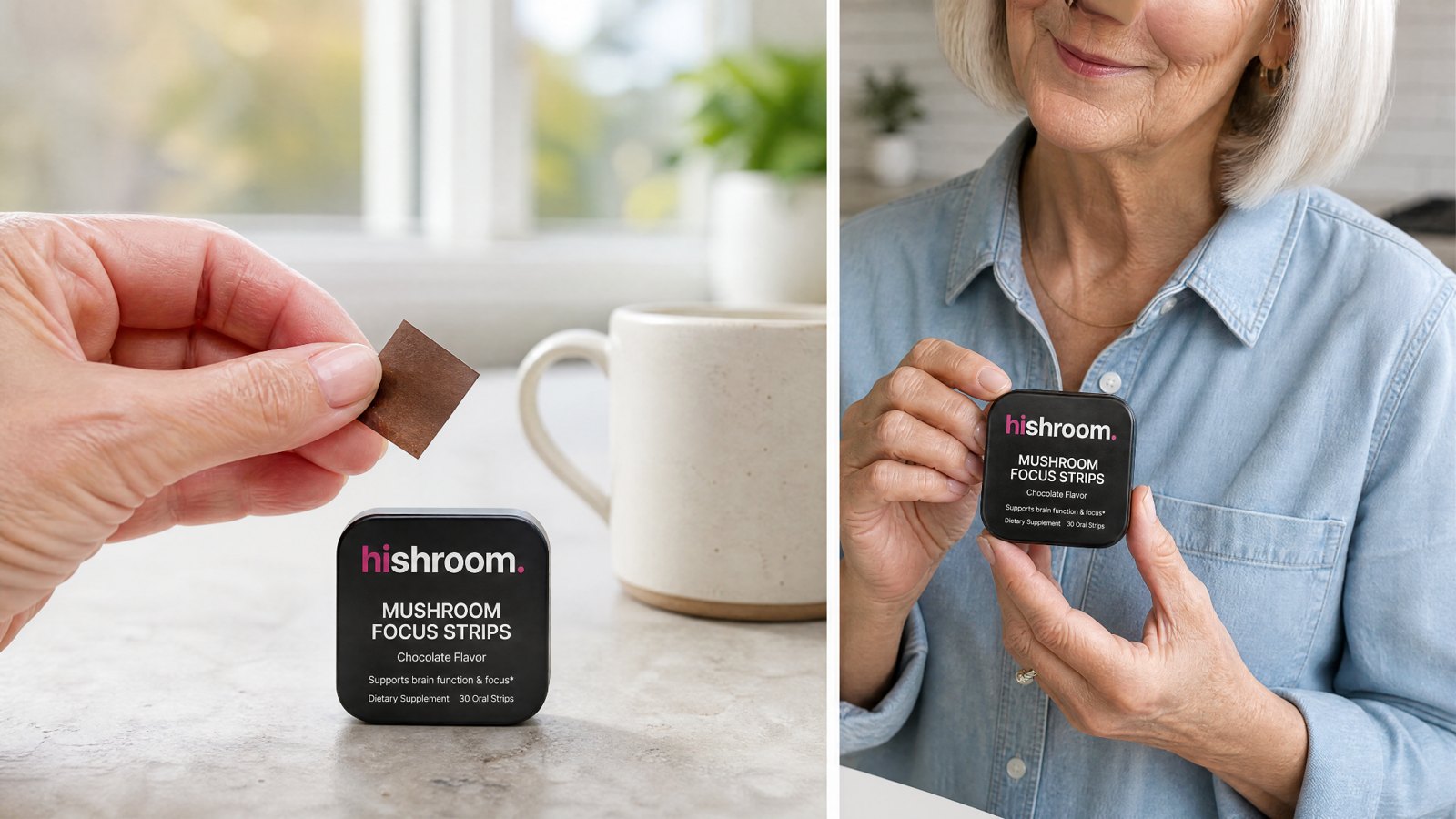
Imagine the practical part being straightforward: no scoop to find, no shaker to wash, and no drink to finish before leaving the house.
The format lets you keep the daily serving connected to a familiar moment. It might be after breakfast, when you check the day’s plans, or another time that suits the directions.
Your routine should support your day, not take it over. Keep track of what matters to you, and seek advice about memory concerns on their own merits.
Think of the small jobs that surround a familiar habit. The cup needs washing. The keys need putting away. The calendar needs checking. Adding a supplement does not need to mean adding another collection of equipment to the counter.
With a strip, the preparation is already done. You still read the directions and keep track of the serving, but you do not have to work out a scoop size or finish a separate drink before heading out.
That is a modest, concrete difference. For someone who dislikes swallowing capsules or measuring powders, it may be the part of the product that matters most.
Each tin contains 30 chocolate-flavored oral strips. The directions are one strip daily. That is 30 daily servings when used as directed.
The individual amounts are listed on the label. The mushroom ingredients total 100 mg per strip; the complete film has other ingredients too.
There is no measuring step. You do not need to turn a powder into a drink or decide how full a scoop should be.
365-day money-back guarantee. Contact info.hishroom@gmail.com with your order number to request a refund. See the refund policy for details.
If you take the tin away from home, the daily serving stays the same. Portability is a convenience, not a reason to add an extra strip. A simple note or check mark can help if you are unsure whether you have already taken the day’s serving.
One melts on my tongue after lunch and tastes like rich chocolate with a little hint of coffee.
Diane Z. • Excerpt from the review above
I take one each morning with my first cup of tea, before I head out for my walk with the grandchildren.
Rocio W. • Excerpt from the review above
They taste like chocolate, and it’s the first routine I’ve actually stuck with. I’ve already reordered.
James M. • Excerpt from his review above
No pills to swallow, no glass of water needed. One just melts on my tongue, so I actually remember to take it.
Gregory B. • Excerpt from his review above
It is easy to focus on the largest discount and overlook the amount paid today. A six-tin order has the lowest price per tin, but it also has the largest total. Both numbers matter.
There is nothing complicated about the quantities. One tin holds 30 strips, three tins hold 90, and six tins hold 180. At the label’s maximum of one strip daily, those are 30, 90 and 180 daily servings.
A larger order does not change the directions. Nor does it establish how quickly someone will notice a change in memory. It tells you how much product is included in the purchase.
If you are trying the format for the first time, consider the amount you are comfortable ordering. If you already know it fits your routine, compare the bundle totals and decide what suits your budget.
You can choose one tin for $39.99, three tins for $104.99, or six tins for $162.99. The stated discounts are 31%, 40% and 53%, respectively.
The three-tin option works out to $35.00 each. The six-tin option works out to $27.17 each. Per-tin figures are rounded to the nearest cent; the order total is shown separately.
Every option contains the same HiShroom Mushroom Focus Strips. You are choosing a quantity, not a stronger formula or a different daily dose.
Before completing checkout, check the quantity, shipping details and total shown for your order. Keep the confirmation so you have the information to hand if you need help later.
Taking extra strips is not a shortcut to a better result. Do not exceed the recommended daily serving.
Choose one familiar point in the day and keep the instructions with the tin. You do not need an elaborate schedule to understand one serving. If you use a calendar or checklist already, a single check mark may be enough to record it.
The important distinction is between remembering the routine and judging a health concern. Taking a supplement consistently does not explain a new memory problem. Keep a note of changes you want to discuss, and bring the full product label if you ask a clinician about suitability.
Choose the supply that fits your routine.

Our lowest price per tin is in the 6-tin bundle.
365-Day Money-Back Guarantee
The offer cards show the price of each complete order, along with the price per tin. That makes it easier to compare the quantities without doing the arithmetic yourself.
For one tin, the total is $39.99. For three, it is $104.99. For six, it is $162.99. Check the checkout page for any shipping charge and the final amount before confirming your purchase.
A lower price per tin can be useful when you want a larger supply. It is still worth choosing the quantity that makes sense for you today, rather than assuming the largest bundle is the right choice for everyone.
Here is what happens next: choose an offer below and open the HiShroom product page. Select the quantity you want, review the details and continue to checkout when you are ready.
Check your delivery address and contact details carefully. After ordering, keep your confirmation and order number together. If you have a question, those details make it easier to explain which purchase you are asking about.
Your HiShroom purchase includes a 365-Day Money-Back Guarantee. You can read the complete return and refund terms before you place an order.
Keep your order confirmation. If you need help with a purchase, contact info.hishroom@gmail.com and include your order number so the team can identify it.
The guarantee applies to your purchase; it does not change the serving directions or promise a particular health result. Choose the quantity you want, read the terms and keep the product information with your tin.
I’ve been enjoying my HiShroom strips for a few weeks and I genuinely look forward to them. I take one each morning with my first cup of tea, before I head out for my walk with the grandchildren. The chocolate taste with that hint of coffee is lovely. I did a lot of research before buying, and I’m glad I made this choice. It’s the one routine I haven’t dropped.
Rocio W. • Review repeated here for reference
The name you want to remember. The errand you planned. The conversation you want to follow without losing the thread.
Start by noticing what is happening. Keep practical supports simple. If a change concerns you, talk it through with a health professional.
If you are also considering a daily mushroom supplement, make that choice with the label, directions, and terms in front of you.


Ordinary moments are often the ones you want to feel less complicated: finding your glasses before the newspaper is folded away, remembering the time of a visit, or finishing a story without wondering what you meant to say next.
A few clear notes can help you explain those moments. They also give you something more useful to discuss than a general feeling that everything is slipping. You do not have to dismiss a concern simply because you cannot yet explain it.
If you choose HiShroom as part of your routine, let it be an informed choice about a product you understand. Read the serving, check the ingredients and decide whether the format appeals to you.
Open the tin. Remove one strip.
Place it on your tongue. Let it dissolve.
Follow the label. One strip daily.
HiShroom brings four mushroom ingredients together in one chocolate-flavored oral strip. The format is compact, the serving is already prepared, and the directions are simple.
Read the complete product information and decide whether it fits your routine.
Your memory concerns deserve attention. Your product choices deserve clear information. Both can start with a closer look.
You have now seen the seven everyday situations, the difference between ingredient research and a finished formula, and the practical steps involved in taking a strip. You can also compare the three offers without searching elsewhere on this page.
There is no extra preparation to buy into. Each tin contains the strips, and the label gives you the directions. The rest is deciding whether this is the format you want to use.
If it is, choose your supply below. If you still have a question about the ingredients or your order, use the product details and contact information before checking out. A clear decision is one you can explain to yourself, including what the product contains and what you are paying.
365-Day Money-Back Guarantee

| Mushroom ingredient | Per strip |
|---|---|
| Lion’s Mane | 30 mg |
| Cordyceps | 25 mg |
| Maitake | 25 mg |
| Shiitake | 20 mg |
One strip daily. Review the full label, including other ingredients, cautions and storage instructions.
Customer experiences are individual and are not evidence of a clinical memory benefit. Lifestyle and portrait images are illustrative.